from History of Rice and Steele Counties Vol 1 and 2, 1910.
"Henry Remick was born in Harting County, Ohio, December 11, 1859 (60). He is the son of Joseph and Elizabeth Remick, natives of Germany. They came to America in the 1840's and located in Ohio where the father worked on a farm. In 1867 he came to Minnesota and settled in Erin Township, Rice County, and farmed there until 1907 when he sold his farm and bought in Forest Township, where he now lives. Mrs. Remick [mother] died in February, 1901. Mr. Remick attended the public schools in Shieldsville, and after leaving school worked on a farm. In 1887 he bought 107 acres in secition 18, and later eighty acres in section 20. He now lives on section 18 and does general farming. He was married in 1890 to Sophia Deman, a daughter of Christian and Johanna Deman, the parents being natives of Germany who emigrated to this country. Five children have blessed the home... Henry, George, Fred, Mary and William. Mr. Remick is a member of the Lutheran Church. In his political views he is an independent voter. He has served on the town board, and is now serving on the school board. He is a stockholder in the Farmers' Co-operative Elevator Company in Faribault."
Henry Remick and Pearl

They raised three children: Mayland, Jerome and Viola L. (Souder).
Mayland married my aunt Pearl (Schotl),
joined the U. S. Navy and together
they set off for California.

Jerome married Ruby Rydeen, also joined the U.S. Navy, and they, in turn, went to California. We have photos of all of them with friends as they gathered for dinners and parties.
Pearl and Mayland's parents got telegrams stating that Mayland was missing in action somewhere in the South Pacific. Another telegram followed stating that his ship had been torpedoed by the Japanese off the coast of Australia and he was one of the crew members that was killed. The body was shipped back to Minnesota for burial at the German Union Cemetery, Forest Township, Rice County, Minnesota.
Convoy GP55 was a convoy of Allied ships that travelled between Sydney and Brisbane in June 1943 during World War II. It comprised ten cargo ships, three Landing Ships, Tank and an escort of five corvettes. The Japanese submarine I-174 attacked the convoy on 16 June, sinking the United States Army transport ship Portmar and damaging USS LST-469. Two of the corvettes subsequently counter-attacked I-174, but only lightly damaged her.
from the Dakota County Tribune of June 1943. "He was born in Millersburg, Rice county, 28 years ago, and attended school at District 54, Dakota county and in Castle Rock village. His parents lived for about seven years on the old Livingston farm now occupied by Mr. and Mrs. Fred Hamann, and a couple of years in the Castle Rock vicinity. His father is the chief engineer of the St. Paul water works. Mayland, who is a nephew of Mrs. Ham Clay Sr., and Mrs. Fred Hamann of Farmington, has a brother Jerome, also in the navy and a sister, Mrs. Dick Souder of St. Paul."

In the last blog about the Michael Schotls, I included a connection to Garrison Keillor and the Prairie Home Companion. Russ Ringsak has been their tour truck driver, almost from the beginning. He is also now described as a researcher and writer.
Russ is engaged to Denise Remick. They live in Stillwater, Minnesota. Denise is a daughter of Jerome Remick and Ruby Rydeen Remick. She is also listed as co-author with Russ of the book Minnesota Curiosities.

"Denise was raised in St. Paul on the storied East Side. She hopped a westbound freight train to Seattle on a summer break from college and has followed an abiding interest in people and places ever since, once leading a horse expedition from Minnesota to Colorado (they didn't quite make it). She has worked as a cartographer and is currently employed as a production artist in a Minneapolis ad agency." [from 'About the Authors' in Minnesota Curiosities']
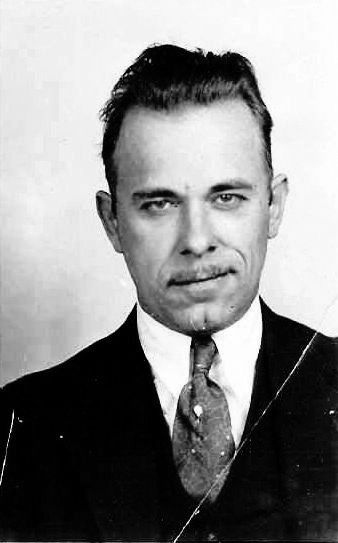
As a young girl her mother, Ruby, met John Dillinger up close and personal. Through the years, Ruby recalled the incident to any number of inquirers and the incident is also included in the the book Minnesota Curiosities.
"Ruby Rydeen grew up on a farm on County Road 3 in Washington County., about a mile from Big Marine Lake. The back pasture was forested and extended to the shoreline, and it was her daily chore, at the age of 12, to go out there with her younger brother Leroy and bring in the cows. They were offered a ride by a man in a black pickup; she climbed in first and sat next to John Dillinger. He gave them each a sucker and she remembers hers was red, she doesn't remember what color Leroy got. He let them out at the pasture gate and went to his cabin on the lake. Ruby remembers Dillinger as a nice man. ....
"Ruby remembers that the Dillinger cabin had about a dozen chickens in the yard. It wasn't that the boys couldn't afford eggs...it's just that chickens make pretty good look-outs, and you can't shut 'em up by tossing steak at them. He bought the chickens from Joseph Dahlquist, Ruby's great -uncle, and he also got his mail at Dahlquiest's mailbox."
In the book Pioneers of the Big Lake Community (Washington County Historical Society, 2001) authors Dick Johnson and Paul Wahlquist include a version of this incident and several other first-person accounts about Dillinger.

One from Rueben Shalander whose father owned the Shalander store in Scandia [now Meister’s Bar and Grill]. According to Shalander “Dillinger and two cohorts apparently walked into the bar, had a couple beers and left.” It was only later when they saw a photo that they recognized the patron as Dillinger.
Also in Washington County, Dillinger was reported to have
stopped at Lynch’s Chicken Shack, now the Club Tara on Highway 36. He was also reported to have been hiding out
at Crocus Park in Bayport. According to the Bayport Herald, Washington County
Sheriff Thomas Maher revealed that the bandit was there on June 22, 1934
[Dillinger’s birthday] waiting for a report from his cohorts as to the
advisability of crossing into Wisconsin on the Hudson or Stillwater bridges.
His identity was revealed to the authorities but before the officers could
surround the area Dillinger slipped away, avoiding arrest.
Brent Peterson was manning the archives the day Shan and I were doing research at the Washington County Historical Society. I mentioned the Ruby Remick family connection and he said his family was also related to her. Small World. Brent is the Executive Director of the society and the man who is in the know about the area history. The research center is housed in a building behind the Warden's House. The site is next to the original Stillwater Prison. Next time you are in the area, stop by for a visit.
Warden's House Museum

"The prison was Minnesota's first, opening in 1853 before statehood. The warden's house several hundred yards away is the only original building remaining from 1853. The house, along with a nearby carriage house, have been operated as a museum by Washington County since 1941."..."The prison closed in 1914, six years after a new maximum-security prison opened nearby. But the factory and warehouse buildings were used for twine production into the 1970s by prisoners brought over from the new facility."
Stillwater Prison with Warden's House

Most of the original buildings were destroyed in a vandal-set fire in September of 2002. Now contemporary condos grace the grounds.
The Schotl and Remick families kept in touch after Mayland's death. When I was very young, I can remember visits to the grounds of the St. Paul Water Department for family gatherings. The address is 1900 Rice Street, very close to Mc Carron lake which had a popular beach and was a good place to fish for sunnies. Mayland's parents, Henry J. and Louella lived on the grounds which seemed like a big park. He was the Chief Engineer.

Jerome died on April 18, 2003 at the age 85. He served as Deputy Chief of the St. Paul Fire Dept. for 42 years. His last address was at Marine on the St. Croix.