Showing posts with label Stearns County. Show all posts

Thursday, July 25, 2013

Stearns County Museum and Granite Industry


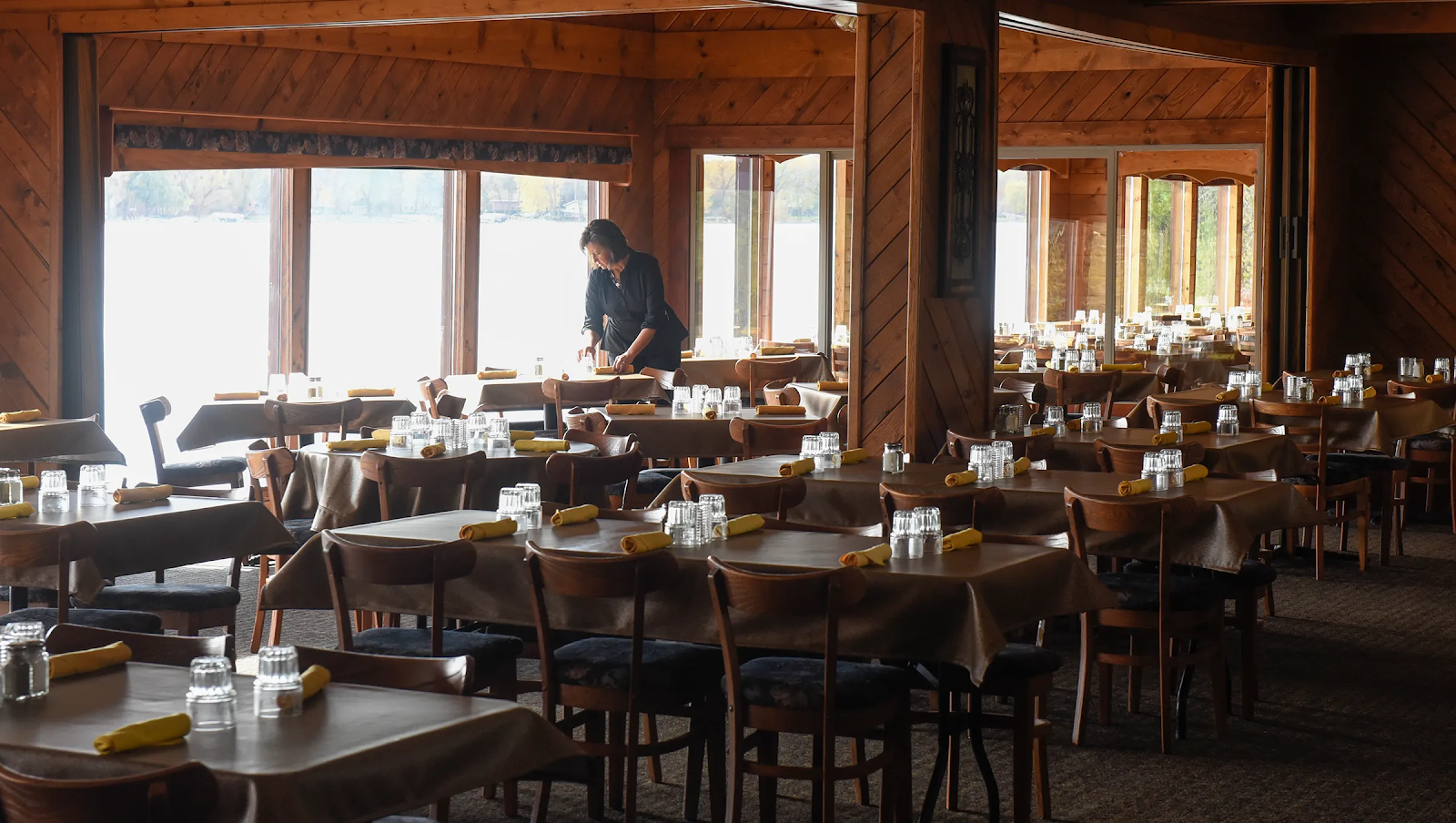
 Still in pursuit of Michael and Elizabeth Schotl's farm, we decided to check out Pleasant Lake and took the short drive to the 400 Supper Club that  spreads out along the lakefront.  From the front room you can see most of the lake and activity which was of pontoon boating, water skiing, and rubber rafting.  The lake was clean with a large bed of lily pads just out front.


The beer list lacked much in the way of locally brewed choices but the food was good.  The service was slow and more attention should have been paid to cleaning up vacated tables, but we were willing to indulge for the sake of the genealogy quest.  After dinner we browsed the bulletin board and found some history among the many photos, match book covers, and other but no mention of any Schotls .  Maybe this is because the dance hall/pavilion creations and expansions all took place on the other side of the section line.  Some of the Schotls may have put their dollars down and enjoyed club membership.  They may have walked down the spiral staircase "to sit on the porch and enjoy the cool lake breezes" but unless we find the original membership list we won't know for sure.

 Covid closed down the 400 club but it has recently (2022) been reopened under new management.


We spent most of the next day at the  Stearns County History Museum and Research Center, checking the gift shop for relevant books, touring the exhibits and working in the research center.  We were looking for plat maps, information on Hanson's dance hall  and wanted to copy Schotl listings out of the Polk directories.
 
Soon after settling into the research center, an older gentleman came over, sat down and started looking through our files and the files that had been pulled for us. No introduction, no way of knowing who he was.  It was a bit disconcerting.  It soon became apparent that he knew his way around the archive.  He said he had grown up in the area, his relatives had owned businesses in Rockville and he was now volunteering at the museum.  He said he was there 7 days a week and that it "sure beat a rocking-chair".
 

A few days later, after we were home and I was searching the web for items about Rockville and St. Cloud granite quarries, I discovered who the volunteer was when I found his obituary on the St. Cloud "facebook" page.  His name was Robert J. Lommel, known locally as "Bicycle Bob".  He had died just four days after our visit and his contributions to our story.  


Before we started our research, we toured the Museum exhibits.  We were particularly fascinated by the granite quarry display.  In the small theatre we watched a video of the granite industry. 


The WPA mural, "Construction-St. Cloud ", originally done in 1937,  by David Granahan for the local post office has been relocated to the museum.  It is featured near the granite display.

 
For the many times that I have driven by and admired the Minnesota State Capitol and the St. Paul Cathedral, I never made the connection that  granite from the Rockville area was used in their construction.  The Cathedral was Archbishop John Ireland's last pet project for which he chose the architect, raised the funds, and almost daily supervised the construction.  All good Catholics, regardless of their meager wage, were asked to contribute.  Although James J. Hill had contributed to other Catholic building projects, his name is conspicuous by its absence from this donor list. 
                                                  Saint Paul Cathedral, Saint Paul MN
 
Even before they moved off the farm some of Michael and Elizabeth Schotl's sons worked in the granite industry.  Those that left the farm often settled in the St. Cloud  area either living with siblings or spouses.  They are listed  in St. Cloud Polk Directories as quarrymen, drillers, sawyers, helpers and humpers. 
  
 Since its founding in 1856, St. Cloud has had a history of many valuable manufacturing industries. Though a sawmill was the first major manufacturing organization in town, it soon became the granite industry that really defined St. Cloud. With the first quarry opening in 1863, there are now over 30 granite quarries in the Greater St. Cloud Area. And thus, the “Busy, Gritty Granite City” was born.

Of interest to our family is the fact that many of the cranes and derricks used in the industry were made by the American Hoist and Derrick Co. of St. Paul.  My father, Reynold Glaeve, was employed by the company as a machinist after his stint in the CCC's. At one point he and I  spent time going over an old company catalog.  He was able to tell me about machine parts on which he had worked.  I know he would have enjoyed seeing photos of  this heavy equipment in the granite quarries.   

So much learned but still much to discover. Next time we need to get to the courthouse and research the property records. 


Monday, July 22, 2013

Schotls in Rockville

 
I wrote about Great Uncle Michael Schotl and his wife Elizabeth Hoffman Schotl in an earlier blog.  In July of 2013, Shan and I traveled to Stearns County to  gather information about their lives in Rockville Township and their farm on Pleasant Lake.
 
In 1921, Michael and Elizabeth sold their Washington County farm and bought a large farm in Stearns County.  In the 1925  Farmer's Plat Book we found a  farm  in Rockville Township consisting of 248 acres in Section 2 along the NW shore of Pleasant Lake.  A 40 acre farm in the NE corner of this section was owned  by G. and J. Hoffman, who we think are Elizabeth's brothers George and Joseph.

In the 1930 Federal Census Michael and Elizabeth are living on a farm in Rockville Township with 10 of their 15 children.  The farmhouse may be the old Cooper-Searle House.

In 1933, Michael Schotl died after dancing with his wife at Harry Hanson's Pavilion near
Rockville.  He was only 56.  In his obituary it states that he owned 640 acres.  We didn't know where the additional land was located until we found The Farmer's Directory of Stearns County for 1931.  Michael and Elizabeth are listed in Rockville Township as owning 288 acres in Section 2, but also owning 40 in Section 35 and 320 acres in Section 36 of St. Joseph Township--the adjacent township to the north.  We also found Elizabeth's brothers George and Joseph owning an additional 120 acres in St. Joseph's Township. 


After his death, Michael Schotl's wife, Elizabeth, inherited the farm.  She continued farming with the help of some of her children.  Other children,  many of whom were already employed in the granite industry, resided in St. Cloud or nearby communities. A few of the girls moved on to California.
 
In 1940, The Village of Pleasant Lake was comprised of three families: the Elizabeth Schotl's, John and LaVerne Saatzen's, (he was a granite cutter) and Donald and Fannie Hague. (Donald was a night club manager)
 
Today Pleasant Lake is a neighborhood of the city of Rockville in Stearns County, Minnesota. The population was 504 at the 2000 census.  On 1 June 2002, the city of Pleasant Lake and Rockville Township were merged into the city of Rockville.


During their time in Rockville both Michael and Elizabeth were active members of the parish of Mary of the Immaculate Conception. 


Both Michael and Elizabeth are buried in the church's cemetery so we went into the village of Rockville to look for their headstones. We drove into the well-maintained grounds of Calvary Cemetery which holds an impressive display of monuments of local granite.  


We spotted the Schotl markers almost immediately.  Sons Michael J., Paul,  Frank, John and Anton M. are buried close by. 
 
At the base of the Michael and Elizabeth marker is an inscription in German which translates:   "What you are now, I also have been and you also will become.  Leave me rest in peace.  Amen  Please pray for us." 


Wednesday, April 24, 2013

Great Uncle Michael Schotl and his brood


Up until this point, these blogs have been pretty linear. Not that I didn't mess up and get some stuff out of order. I did do some back-tracking, correcting and revising.   Well, from here on, NOT SO MUCH.  I am finding it harder to keep things chronological and flowing at the same time.   I will present what Shan and I have been able to nail down, add a heavy dose of visuals, and fill in the blanks as we continue to search for the details.  

Great Uncle Michael, the brother of my Grandfather Frank, was one of five children born to Mathias Schotl Sr. and Theresia "Therese" Kornfield. He was born in Hungary during May of 1873.  There are discrepancies in his emigration dates, but he arrives sometime between 1895 and 1897.
 

In 1900, we find him residing in Columbus Township, Anoka County, Minnesota and living on a farm with John Koch.  His age now is 27.   He is married to Elizabeth Hoffman.  

In 1905, according to the Minnesota Census, he is still residing in Columbus Township, Anoka, Minn. with a Forest Lake PO number.

In 1910, according to the Federal Census,  he is living on Schotl Road, working on his own farm in Columbus Township, Anoka County, Minn.

Four of Michael's children; Joe, Mary, Grace, and Kate are pictured in the photo below from ca. 1910 at Oneka School, dist # 75, in Washington County.  His WWI draft registration of 1917 was filled out in Forest Lake township, Washington County.  He is listed as being employed on his farm. 


So, if the school dates are correct, the family left Anoka County and settled in Washington County circa 1910 According to his obituary the family moved to Stearns County in 1921.  Michael purchased the 640 acre farm from the Hodgeson Estate.  The farm was originally owned by Dolson Bush Searle, a pioneer in the Stearns County are.  D.B. , a Civil War veteran, was a lawyer and later a judge  The 1930 Federal Census lists Michael and Elizabeth as residing in Rockville, Stearns County. The family had grown to fifteen with ten of the children still living on the farm, two of these boys were employed off the farm. The other five had moved to the nearby cities of St. Cloud and St. Paul. Paul married Laura M. Dietman and was living with his wife and his brother, Math (28) at 142 18th Ave.  They were both working for the Melrose Granite Co. 
Elizabeth and Katherine were single and lodgers in the home of Louis and Josephine Wurganger, 80 E. 9th St., Ward  4, St. Paul MN.  They were waitressing in downtown St Paul. 
Grace married Gregor Dullinger who was employed as a granite stone-cutter and they lived in Rockville Township with his parents.
    Melrose Granite Quarry


    The St. Cloud area is known for it's granite quarries. At one time stone was shipped to a 30 state area with many architects and designers seeking our their unique product. The St. Paul Cathedral was one of the first large projects. The exterior was created from Rockville Granite that arrive from the Clark Quarry just outside St. Cloud Minnesota.

     Melrose Granite Showroom


    Two important authors/ personalities were raised in this area. 
    The Sinclair Lewis' novel Main Street was required reading for many of us.  "As a native of a prairie community in Stearns County he was intimately aware not only of the rural area around him but also of the settlers. The German and Scandinavian farmers of the region figure prominently in most of his early stories..."  In many instances the Germans or German speakers play the buffoon, the Sunday drunk, or the un-washed others.  In Main Street, on the train ride back to Gopher Prairie, Doc. Kennicott remarks about a prosperous German farmer he spots through the window.  "He's a dumm old Dutchman and probably the priest can twist him around his finger, but when it comes to picking good farming land, he's a regular wiz!" - Main Street   
    A few of my favorite Sinclair Lewis quotes: 
    “The greatest mystery about a human being is not his reaction to sex or praise, but the manner in which he contrives to put in twenty-four hours a day.”   Main Street
     
    “Thus Carol hit upon the tragedy of old age, which is not that it is less vigorous than youth, but that it is not needed by youth...”  Main Street 
     
    “When fascism comes to America, it will be wrapped in the flag and carrying the cross.”  ― Sinclair Lewis

The other is, Garrison Keillor of Lake Wobegon and Prairie Home Companion fame. There is a trail from Sauk Centre to St. Josephs named the Lake Wobegon Regional Trail.  It runs from Sauk Centre, the original home of Sinclair Lewis, to St. Joseph through the town of Melrose where some of the Schotl's and friends had worked in the quarries.


    Keillor's first radio gig was with  MPR at KSJR on the campus of St. John's University in Collegeville.  He formed most of his ideas for Lake Wobegon from the town of Avon where he lived, and local towns such as Albany, Freeport, Cold Spring, Richmond, Rockville, St. Joseph, St. Stephen, St. Wendell and Holdingford.
    At that time Stearns County was predominantly German and next to New Orleans, the second most Catholic county in the USA.   In order to balance the religious and ethnic demographics of the physical location in Stearns County with the rest of Minnesota, Keillor 'imported' the Lutheran and Scandinavian elements into the mythical town, making it more identifiable and therefore more interesting to the rest of the state."
                        [some of the above info obtained from wikipedia]


    The first on-stage presentation of A Prairie Home Companion was performed before a live audience on July 6, 1974. It was an old-style variety show that featured guest musicians and a cadre cast doing musical numbers and comic skits replete with elaborate live sound effects, much like today’s A Prairie Home Companion. 

    Keillor quotes:

    "In general, the rules for marriage are similar to the rules for being in a lifeboat on the open ocean: don't crowd each other, no sudden moves, and keep all disastrous thoughts to yourself."

    "I believe in looking reality straight in the eye and denying it."

    “One day Donald Trump will discover that he is owned by Lutheran Brotherhood and must re-negotiate his debt load with a committee of silent Norwegians who don't understand why anyone would pay more than $120.00 for a suit.

    "When you wage war on the public schools, you're attacking the mortar that holds the community together. You're not a conservative, you're a vandal."


Prairie Home Companion at Anoka High School


Garrison was born and raised in Anoka Minnesota.  He graduated from Anoka High School in 1960.  He married and raised his family in the area.  He went on to school at the University of Minnesota in Minneapolis.  That would be the town on the other side of the river from my home town. But he finally got it right and moved to St. Paul and now calls an address on Summit Avenue home.  And that would be if he isn't inhabiting his flat in Manhattan or on the road with his show. 


My relatives, the Schotls and Kunshiers, had worked on the wire-grass farms and in the potato fields in the general vicinity of Anoka.  Some also moved on to St. Paul to work in the factories and the bakeries and bars.  They settled in the North End, blue collar area, and were known as Rice Streeter's.  They may have glanced up Summit Avenue as they rode the Dale Selby street-car through the Selby tunnel to downtown. They certainly never were invited to the James J. Hill mansion or the University Club, both Summit Street landmarks.


Dale-Selby Streetcar going into the tunnel near the St. Paul Cathedral


Corrections and comments are always considered. Please use the comment page below or become a follower, or just say hi from time to time.